Escape Color Hero 3D: Mobile hide-and-seek driven by color
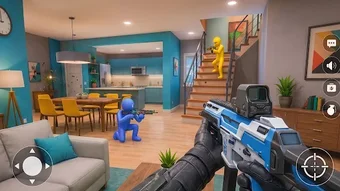
Escape Color Hero 3D, from Ramzan m, drops players into a brightly colored hide-and-seek arena where color matching is the central challenge. Players paint their character to blend with room textures and compete in short, timed rounds that reward spatial awareness and quick decisions. The app pairs a paint-and-blend camouflage mechanic, touch-optimized movement, and vibrant indoor 3D arenas for tactical encounters. Casual mobile gamers who enjoy social action and light puzzle strategy are the intended audience.
What kind of game is Escape Color Hero 3D?
So, the core loop turns childish hide-and-seek into an action-puzzle: two teams swap roles as Hiders and Seekers inside compact 3D arenas. Hiders choose colors and position themselves to blend with nearby surfaces while Seekers scan the scene against a ticking timer. Rounds emphasize rapid spatial thinking and improvisation, rewarding players who learn to read light, color contrasts, and likely hiding spots.
How multiplayer shapes match flow and social play
Matchmaking supports both public lobbies and private rooms, which changes how matches feel and how groups organize. Public games expose you to unpredictable opponents, while private rooms let friends rehearse camouflage strategies. Key multiplayer elements include:
- Public lobbies for open matchmaking
- Private rooms for grouped sessions
What the presentation and controls contribute to play
The game uses saturated, indoor 3D environments with clear surface contrasts so color matching reads well on small screens. Users report smooth performance and colorful 3D graphics, which helps during fast rounds. Touch controls are tuned for direct painting and movement, focusing on taps and swipes rather than complex menus. The developer targets Android 7.0 and newer devices to maintain consistent frame rate and input responsiveness.
Is it hard to get started and what keeps you playing?
Beginners learn the paint-and-blend idea quickly because mechanics revolve around simple color selection and positioning. Time-based challenges demand quick thinking, which raises intensity but does not require long practice sessions to be useful. Replayability comes from experimenting with different camouflage combos and switching between public and private rooms, so short sessions provide meaningful practice instead of long grind-based progression.
Escape is best for players seeking short, social rounds with observational challenge
Escape suits mobile players who prefer brief, competitive encounters and group matches; it rewards attention to color and placement rather than extended single-player campaigns. Players wanting long narrative arcs or deep progression systems should look elsewhere. For commuters and friend groups who value quick, tactical rounds, the game provides repeatable, socially driven matches that emphasize quick decisions and spatial awareness.